What can your data tell you about biology?
Let’s figure it out together.
- Training
- PhD in statistics, Stanford
- Experience
- Eight years at 10x Genomics
- Now
- Independent consultant & researcher
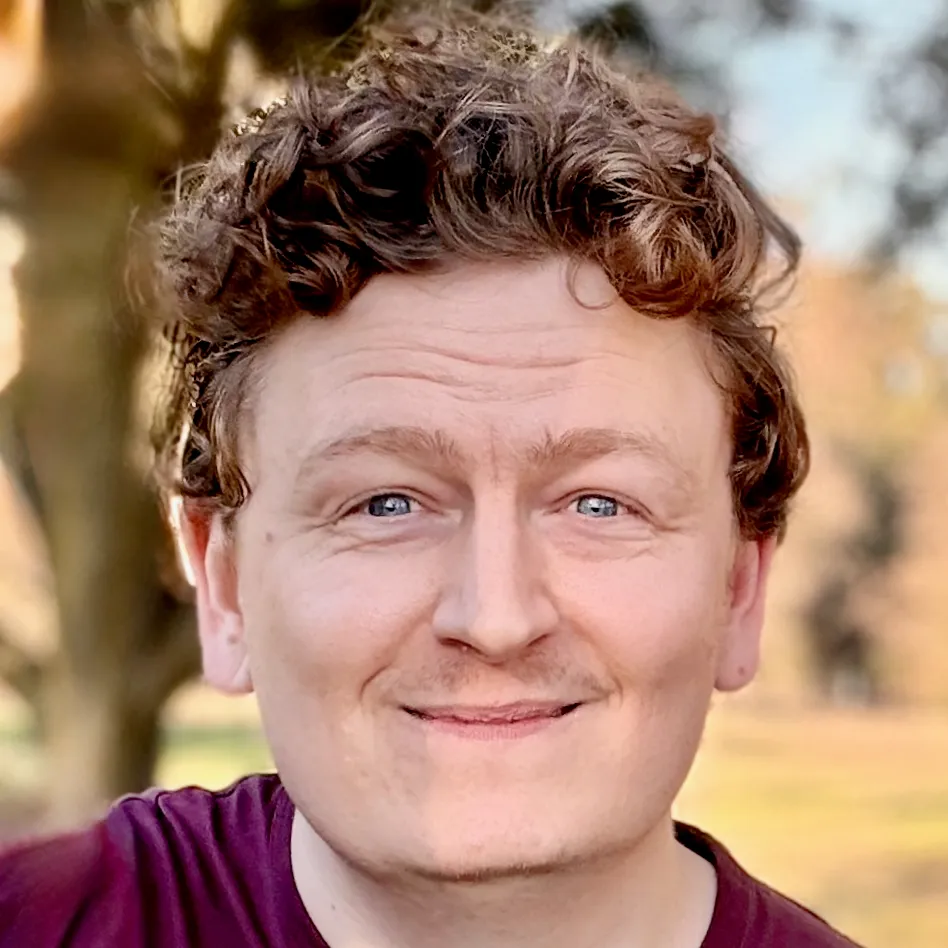
I’m a computational biologist with a background in statistics and eight years of experience developing life science tools at 10x Genomics. I love helping R&D teams and scientists think through omics experiments, data, and computational methods, whether the end goal is a product, a scientific insight, or an AI model.
Where I can help
Developing life science tools
An omics assay, platform, or kit
I can help you…
Figure out which aspects of assay performance matter most for the science, and design metrics and analyses to evaluate them.
Investigate unexpected behavior, trace likely sources, and help assay, instrument, or manufacturing teams decide what to change.
Studying biology with omics
Single-cell, spatial, and bulk experiments
I can help you…
Think through which data modalities, platforms, and experimental designs fit your scientific goals.
Plan and carry out analyses, check methods’ assumptions and interpret their outputs, and adapt or develop methods and software where needed.
Building AI for biology
Designing or evaluating models for omics data
I can help you…
Assess how sampling, assay behavior, and preprocessing affect your training data and what your model learns.
Design benchmarks and metrics that test scientifically meaningful capabilities, accounting for technical artifacts and sampling structure.
My work
Visium HD
10x Genomics
I led a team of computational biologists through the final stages of developing Visium HD, a new spatial transcriptomics platform. My role spanned development through product launch and customer support, working across assay, manufacturing, and software teams.
I also contributed to technical diligence for an eight-figure technology licensing and asset acquisition transaction related to Visium HD.
Read more
I helped establish practices for evaluating assay sensitivity, spatial accuracy, and image-processing performance. That meant choosing appropriate metrics and comparison conditions, explaining what the results meant to internal teams and customers, and connecting computational analysis to product requirements.
My work also informed array design and oligo sequences, prioritizing spatial fidelity and sequencing compatibility. I developed a custom image-processing method, used internally, to help check how well researchers’ histology images aligned with data from the spatially barcoded array.
Other work at 10x
Metrics, references, and troubleshooting
Across projects at 10x, I worked on metric design and interpretation, as well as reference curation. I was also repeatedly called on as a core contributor to high-priority, time-sensitive technical investigations, leading the analysis, communicating findings to senior leadership, and developing solutions.
Read more
- Examined how batch-effect metrics behave across dataset sizes and refined their formulation to give comparisons a consistent statistical interpretation.
- Helped establish separate metrics for two notions of assay sensitivity: molecular recovery and usable data yield at a fixed sequencing budget.
- Curated reference genomes and annotations used internally and distributed to customers, improving gene detection.
Independent work
Methods, software, and writing
I develop methods and software for single-cell and spatial data. On my blog, Overdispersed, I write about how statistical concepts and computational details inform and constrain what we can learn from omics data.
- My first post, The single-cell sampling hierarchy, explores the multiple levels of variation in single-cell data and their implications for replication, count modeling, and the value of collecting more cells.
- sparse-count-pca is a Python package for memory-efficient PCA on normalized count data from single-cell and spatial transcriptomics. It integrates with AnnData and Scanpy workflows, avoiding explicit storage of large, dense matrices that increase computation time and memory use.
Let’s talk
I’d like to hear what you’re working on. Whether you have a specific project in mind or are still figuring out what you need, we can talk through where I might help and what working together could look like. I’m available for focused consultations, hands-on projects, or ongoing collaborations.
You can also email hello@joeyarthur.com or find me on LinkedIn.